The Life
A biography in seventeen plates, from a younger son with 'slight expectations' to the scientific patron of Rushmore.
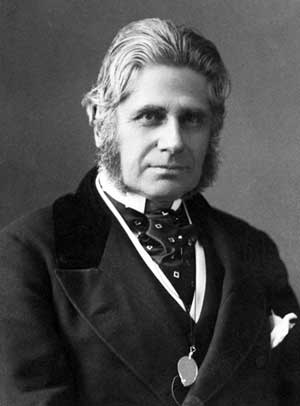
Names he bore
- Augustus Henry Lane Fox, born 1827
- Pitt-Rivers, adopted by Royal Licence in 1880 on inheriting the Rivers estates
- Fox-Pitt-Rivers, the formal surname after the licence of 1882
Birth at Hope Hall, Yorkshire
Born Augustus Henry Lane Fox, 14 April 1827, at Hope Hall near Wetherby. Younger son of William Augustus Lane Fox and Lady Caroline Douglas; granddaughter of the Pitt family connection that would later transform his fortunes.
Death of his father
William Lane Fox dies of tuberculosis. The family moves to 3 St James's Square, London, where Augustus is privately tutored. He will later criticise the classical-only education of his era as unsuited to a scientific age.
Commissioned into the Grenadier Guards
After less than a year at the Royal Military College, Sandhurst, he is gazetted ensign in the Grenadier Guards on 16 May 1845, beginning a thirty-year military career.
The rifle experiments at Woolwich
Posted to the small-arms sub-committee at Woolwich for the experiments that led to the army's adoption of the rifle-musket. Watching successive improvements to the rifle seeds the central idea of his life: that forms evolve by tiny increments, and that a series of objects can be arranged to show the sequence of development.
Marriage to Alice Stanley
Marries Alice Margaret Stanley, eldest daughter of Edward Stanley, 2nd Baron Stanley of Alderley, at St George's, Hanover Square. He had first proposed in 1849, but her parents refused for lack of prospects.
The Crimea
Sails for the East with the Grenadier Guards. Present at the Battle of the Alma and the siege of Sebastopol; brevet-major for distinguished service in the field; decorated with the Order of the Medjidie. The only major campaign of his service.
The School of Musketry, Hythe
Appointed principal instructor at the newly formed School of Musketry and author of the first official Instruction of Musketry. His expertise in the evolution of firearms becomes the foundation of his anthropological collection.
Ireland and Canada
Special service in Canada, then Assistant Quartermaster-General for the Southern District of Ireland at Cork. Begins his first tentative excavations of Irish antiquities.
Elected Fellow of the Society of Antiquaries
His scientific turn is recognised: elected FSA, and a member of the Ethnological Society, the intellectual circle that will shape his theories of culture and evolution.
'Primitive Warfare' lectures
Now on half-pay, he delivers his landmark lecture series on the evolution of weapons and warfare, arranging his collection by type to demonstrate development. It was the first full expression of his typological method.
Excavations begin in earnest
Joins Canon Greenwell's barrow-digging on the Yorkshire Wolds, which he called 'my very first lessons as an excavator'. Then he opens his own excavations at Cissbury Camp, Sussex.
On the Evolution of Culture
Reads his defining paper on the principles of classification before the Anthropological Institute. He argues that the museum exists 'not for the purpose of surprising any one... but solely with a view to instruction', arranging ordinary and typical specimens in typological sequence.
Fellow of the Royal Society
Elected FRS, in his own view chiefly for his musketry work and the collection that grew from it.
The inheritance of Rushmore
On the death of his cousin Horace Pitt-Rivers, 6th Baron Rivers, he inherits one of the largest estates in Britain, some 27,700 acres in Dorset and Wiltshire, and by Royal Licence takes the surname Pitt-Rivers. He is transformed from a working soldier into a landed scientific patron.
Retirement; first Inspector of Ancient Monuments
Retires from the army with the honorary rank of Lieutenant-General, and is appointed Britain's first Inspector of Ancient Monuments under the new Ancient Monuments Protection Act.
The founding gift to Oxford
Donates his founding collection of some 22,000 objects to Oxford University, on condition that the displays maintain his typological arrangement. The Pitt Rivers Museum is born.
The Cranborne Chase excavations
Over seventeen seasons he excavates the villages, forts and burial-mounds of his own estate at Rushmore: Wor Barrow, Woodcuts, Rotherley, Bokerly Dyke, Wansdyke, South Lodge and more, employing local labourers, recording everything, and publishing it all in four lavish volumes.
'Typological Museums'
Delivers his paper coining 'typology' to the Society of Arts: the use of the sequence of types to supply the want of dates among prehistoric and ethnographic objects.
Benin and the end
Purchases the core of his Benin collection in 1898 and catalogues it in Antique Works of Art from Benin, completed as his health fails. He dies at Rushmore on 4 May 1900, aged 73. An advocate of cremation, he is cremated at Woking.