The Legacy
The science survives in every modern dig. The museum survives in Oxford. And the reckoning with his collection's origins continues.
The first scientific excavator in Britain
Total excavation, strict stratigraphy, plotted grids and the recording of everything, including the broken and the mundane, replaced the treasure-hunting of the older antiquaries. His volumes were so exact that E. B. Tylor wrote in the Dictionary of National Biography that 'a modern contractor could refurnish the tombs and forts with their contents in place.'
The typological museum
His insistence that objects be arranged by type and development, rather than by geography or beauty, is embodied still in the galleries of the Pitt Rivers Museum at Oxford, where the Deed of Gift still requires that his 'general principle' be maintained.
Inspector of Ancient Monuments
As Britain's first Inspector of Ancient Monuments he fought a weak law with persistence, securing protection for sites including Kit's Coty House in Kent. That work was the seed of the modern state care of ancient monuments.
A contested inheritance
His Benin collection, purchased in 1898 after the British punitive expedition, is today the subject of restitution. In February 2025 the Pitt Rivers Museum transferred ownership of 72 Benin objects to Nigeria, retaining them on loan. The museum's Rethinking Pitt-Rivers project continues to reckon openly with this history.
The memory of the man
A memorial in the church at Tollard Royal, and the museum he built.
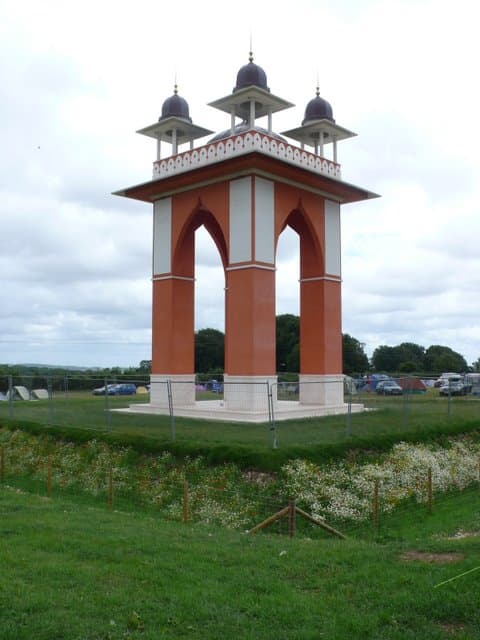
On his own estate he was remembered kindly: the landlord who opened the Larmer Tree Gardens to his workers and the public, who restored and turfed over every excavation, and who left his medallet in the bottom of his pits, to show future explorers that I have been there. In St Peter's Church, Tollard Royal, a memorial stands to the Lieutenant-General. He was cremated at Woking, as he had asked, and his brain was preserved for science until a London bombing destroyed it in the Second World War.
His greatest memorial is the museum in Oxford, where the Deed of Gift still binds the galleries to his typological principle, and where the Rethinking Pitt-Rivers project now studies him as carefully as he studied his artefacts.
The name has carried on, through the farms of the old estate, across an Olympic podium. The sequence of ideas, he might have said, continues.
"I look upon my Museum as being in no way an exception from the ordinary laws affecting all human affairs in regard to development, and that so far from considering it perfect as it is, I cannot conceive any idea of finality in a Museum of the kind."